Partial knee replacement resurfaces only the damaged part of the knee, leaving healthy areas alone. It suits people whose arthritis is limited to one section. Because less is changed, many people recover faster than after a total replacement, though it is not right for everyone.
Kevin Plancher performs partial knee replacement in New York when it is the right step, and reviews every alternative with you first.
What is Partial Knee Replacement?
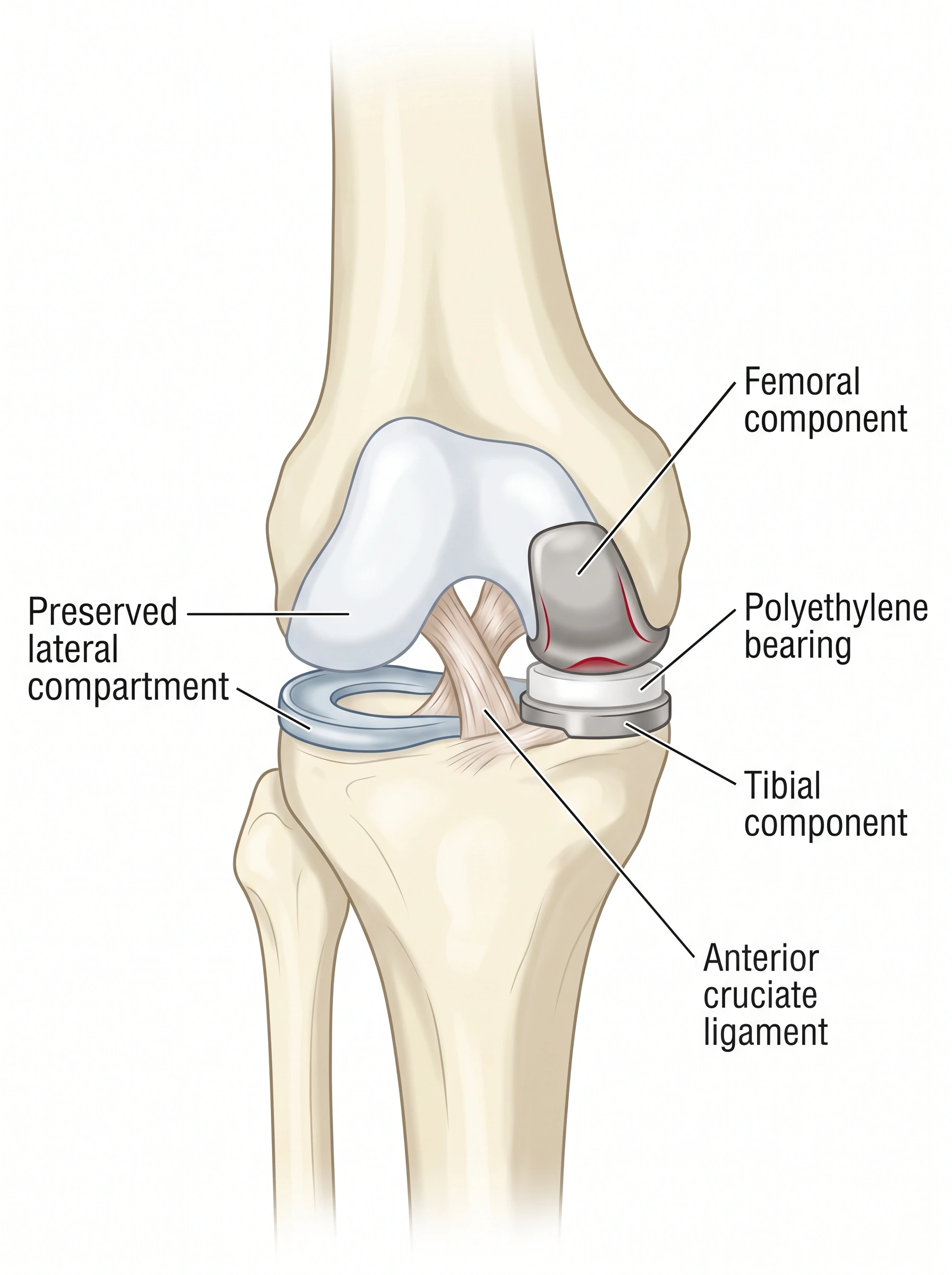
Partial knee replacement, also called unicompartmental knee arthroplasty (a word meaning one compartment of the joint is rebuilt), replaces only the worn part of the knee.
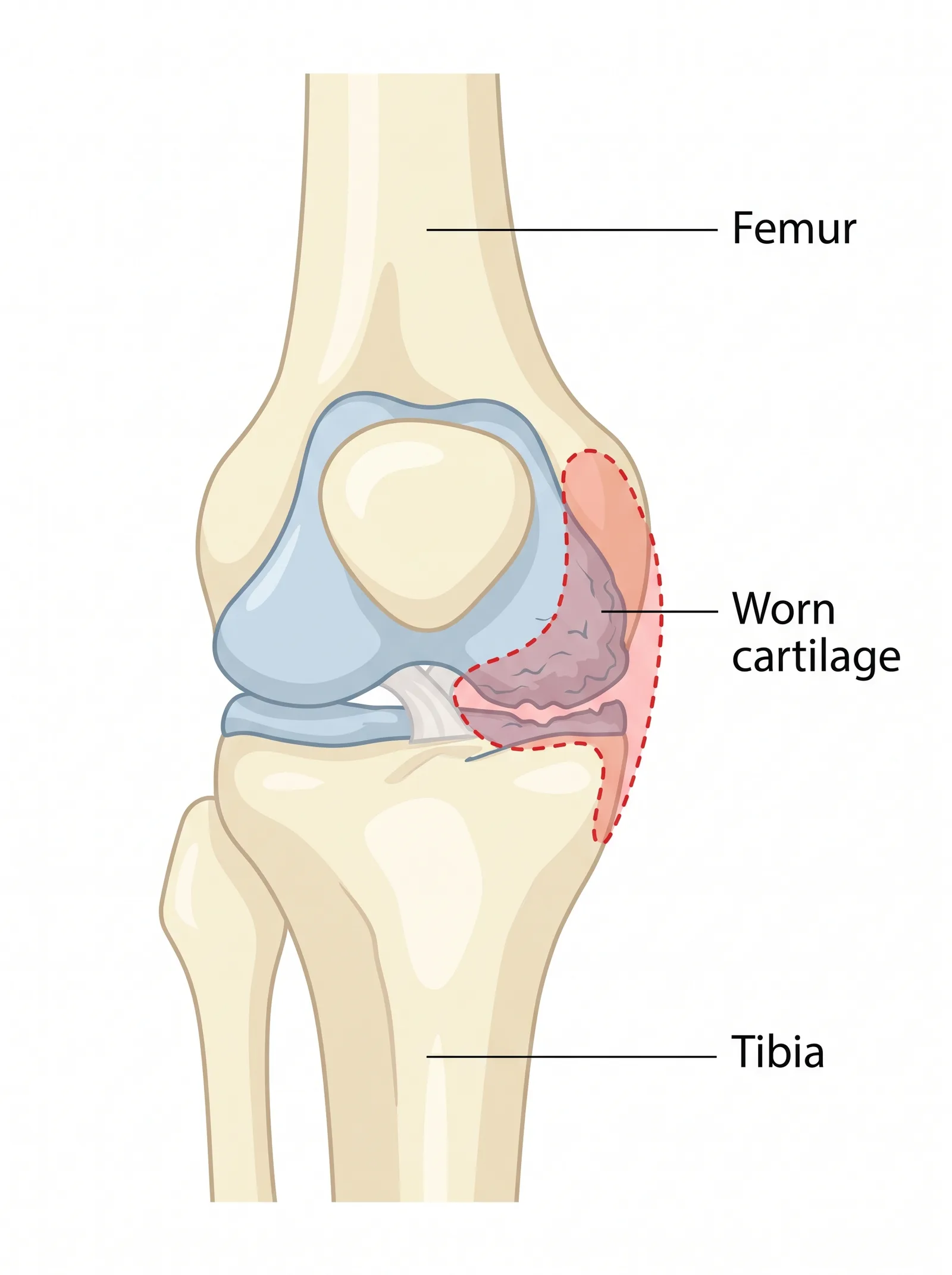
The knee has three sections, or compartments: the inner side, the outer side, and the front where the kneecap sits. In some people, arthritis (joint wear and inflammation) damages just one of these while the rest stays healthy.
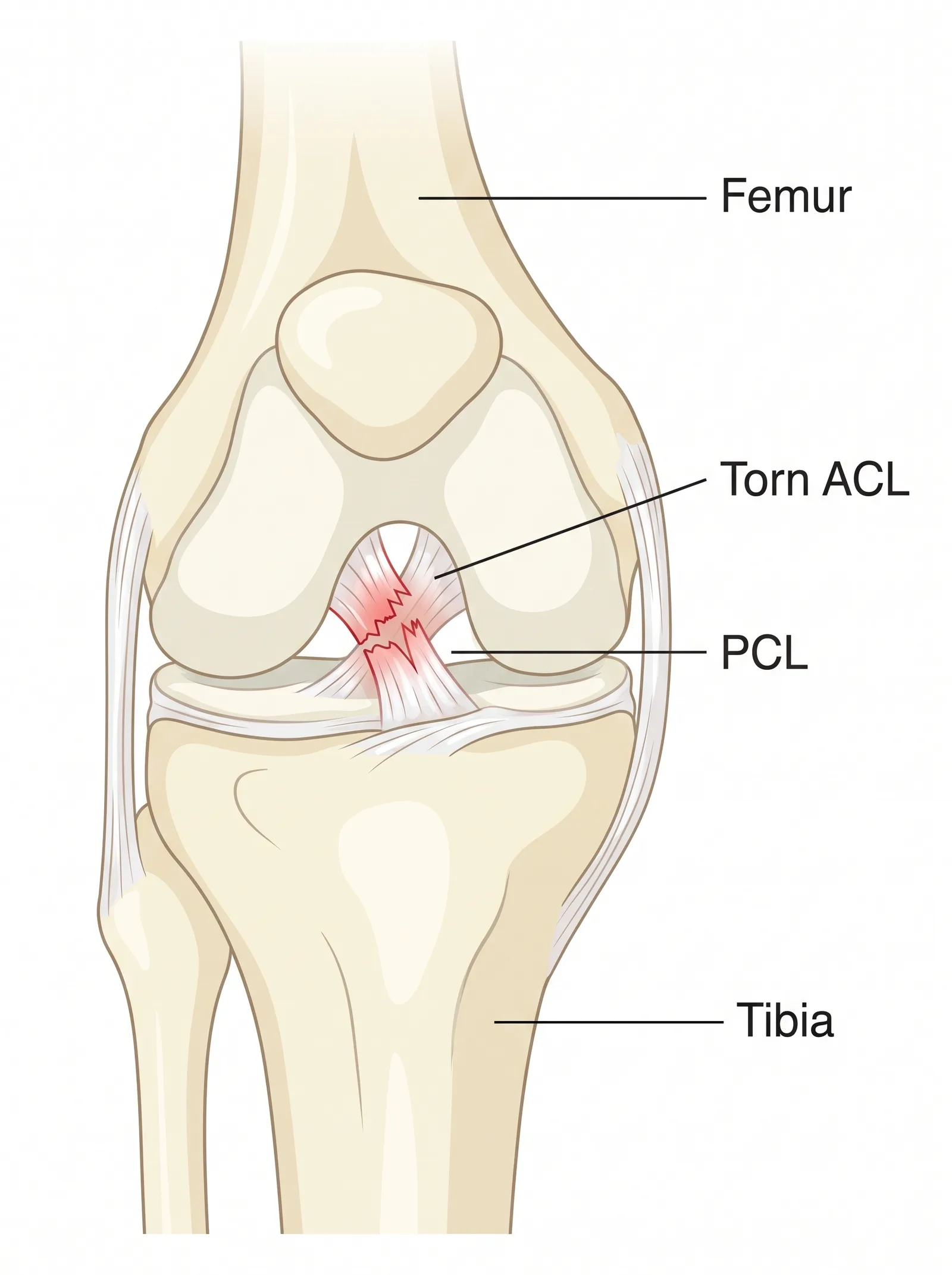
When that is the case, a partial replacement caps only the worn compartment with metal and plastic, and leaves the healthy cartilage and ligaments in place. Ligaments are the strong bands that hold the joint together, including the cruciate ligaments deep inside the knee. Keeping them can help the knee feel more like your own.
This is a deep-education page. For a shorter overview, see our Partial Knee Replacement service page, which links back here.
What are the symptoms of Partial Knee Replacement, and when should you see a specialist?
People who turn out to be candidates for a partial replacement often notice pain focused on one side of the knee rather than all over.
Common signs include the following.
- Pain mainly on the inner or outer edge of the knee. - Stiffness that eases as you move, then returns with heavy use. - Swelling after activity. - Trouble with stairs or standing from a chair. - Pain that no longer responds to therapy, medicine, or injections.
See a specialist when knee pain limits what you do. An orthopedic surgeon can examine the knee and images to see whether the wear sits in one compartment or spreads across the joint. That difference decides whether a partial replacement is even possible. Asking does not commit you to surgery.
How is Partial Knee Replacement diagnosed, and what does the visit involve?
The visit starts with your story: where the pain sits, when it began, and what it stops you from doing.
The surgeon watches you move, checks how the knee bends and straightens, and feels for the exact spot that hurts.
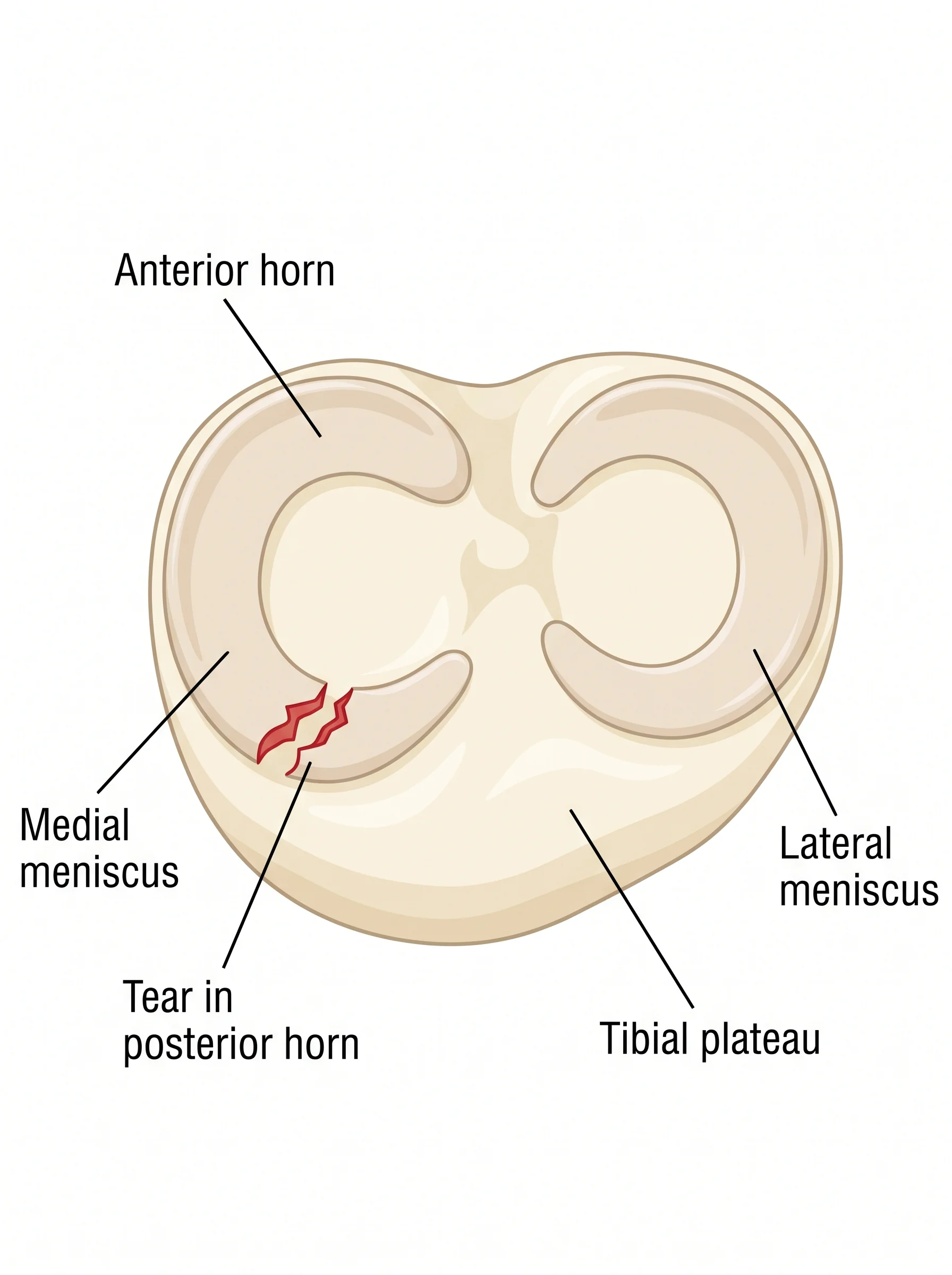
Standing X-rays are central here, because they show which compartment has lost cartilage and whether the others still have space. The surgeon may order an MRI (a soft-tissue scan) to check the cartilage and ligaments more closely, since a partial replacement depends on those being healthy. The final decision often confirms during surgery, once the surgeon can see all three compartments directly.
What is the natural course of Partial Knee Replacement?
Arthritis in one compartment can stay contained for a long time, or slowly spread to others.
There is no way to predict the exact pace, and it differs from person to person.
If you choose a partial replacement, the usual sequence on surgery day is:
- Anesthesia. You receive medicine so you feel nothing, either general anesthesia or a spinal block, managed by an anesthesiologist. - The incision. The cut is often smaller than for a total replacement because only one compartment is reached. - Confirming the plan. The surgeon inspects all three compartments to confirm the healthy areas are truly healthy. - Resurfacing. Worn cartilage and a thin layer of bone are removed from only the affected compartment. - Placing the parts. Metal and plastic parts are fitted to that compartment. - Checking motion. The surgeon confirms smooth movement and good alignment, then closes the incision.
The surgery commonly takes about one to two hours, though your time may differ.
What is the recovery timeline for Partial Knee Replacement?
Recovery is measured by milestones, what you can do, alongside typical ranges.
The ranges below reflect general guidance from the AAOS, 2023. These are ranges, not promises.
First days. The milestone is standing and walking with support. Because less of the knee is changed, many people find early movement more comfortable than they expected.
First weeks. The milestone is walking short distances, handling stairs, and needing less help each day. Many people move to a cane during this period.
Around a few weeks. The milestone is returning to a desk job and driving once you can react safely and are off strong pain medicine.
Six weeks to three months. The milestone is steady walking and returning to low-impact activity. General AAOS guidance, 2023, notes that people who have partial replacements often progress through early recovery somewhat faster than after a total replacement, though this is a range, not a promise.
Up to a year. The milestone is full strength and endurance, which can keep improving over months.
Physical therapy supports every stage.
Read the full guide to preparing for surgery →
Your own recovery instructions come from the office and are specific to you. This page describes the general course, not a plan to follow.
How should you prepare for Partial Knee Replacement?
A little preparation makes the visit more useful.
- Home setup. Clear walking paths, keep daily items within reach, and consider a shower chair and a sturdy handrail. - Transportation. Arrange rides until you can drive again. - Time off. Plan for a few weeks away from work, more for a physical job, though timing varies. - Who to have available. Have someone with you for the first days. - Pre-surgery health. Share your full medicine list and follow instructions about what to pause.
Which warning signs should you call about?
Call the office if you notice the following.
- Fever, or redness, warmth, or drainage at the incision, which can signal infection. - Calf pain or new leg swelling, which can signal a blood clot. - Sudden chest pain or trouble breathing. Call 911. - Pain that keeps worsening instead of easing. - The knee locking, giving way, or a new inability to bear weight.
When unsure, call the office. For emergencies, call 911.
What results can you expect from Partial Knee Replacement?
According to general AAOS guidance, 2023, most people who are good candidates for a partial knee replacement have meaningful pain relief afterward.
Research summarized by AAOS, 2023, reports that many partial replacements last well for many years, though a portion of people later need a conversion to a total replacement if arthritis spreads to other compartments. These figures are ranges from group data, not promises about any one person.
The office can explain what the evidence means for your specific knee.
Who performs partial knee replacement: a complete guide in New York?
Kevin Plancher is a board certified orthopedic surgeon who performs partial knee replacement: a complete guide in New York, NY. Fellowship trained at The Steadman-Hawkins Clinic, Vail, CO – Shoulder and Knee Reconstruction & Sports Medicine, The Indiana Hand Center, Indianapolis, IN – Hand & Microvascular Surgery. Dr. Plancher sees patients at the practice in New York; appointments can be requested through this site.
What do patients ask most?
How is this different from a total knee replacement?+
Will I need a total replacement later?+
Does it feel more natural?+
How do I handle insurance and cost questions?+
Who is a candidate?+
How do payments work?
Contact the office to confirm insurance participation.
Fellowship trained at The Steadman-Hawkins Clinic, Vail, CO – Shoulder and Knee Reconstruction & Sports Medicine, The Indiana Hand Center, Indianapolis, IN – Hand & Microvascular Surgery. Sees patients in New York.
About Dr. Plancher →